Best season
March to May, September to November. Winter days are clear but cold at night; July and August bring daily rain and clouds that hide the mountain.

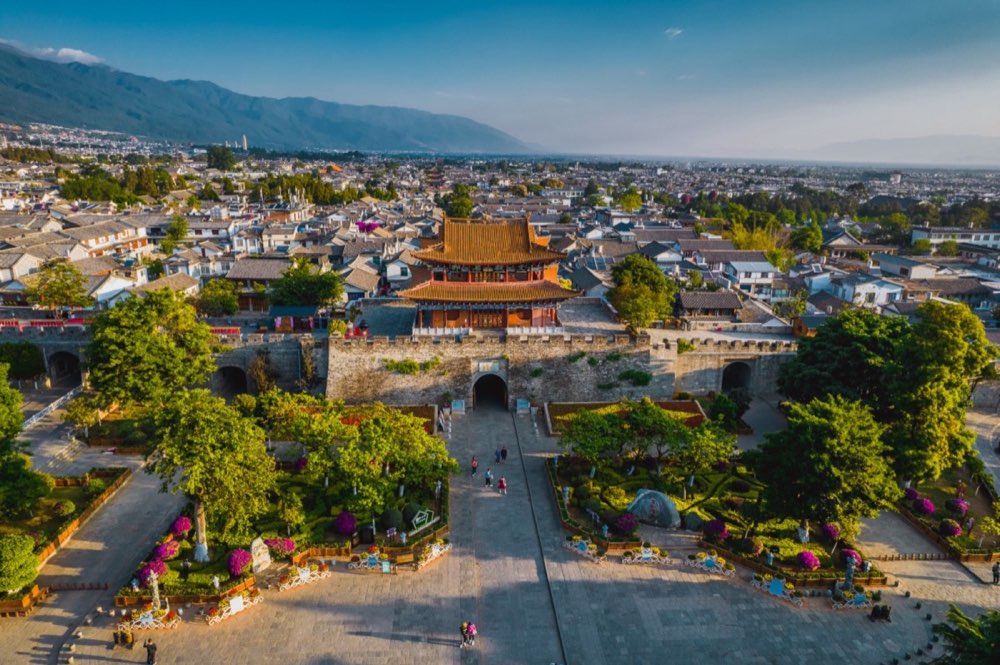
A lake, a mountain range and a walled town — the easiest place in Yunnan to accidentally stay four days.
Dali sits at about 2,000 metres on the southern edge of Erhai Lake, with the Cangshan range rising almost vertically behind the old town. It is the capital of the Bai people, and the first place most travellers understand why Yunnan is compared to a whole country rather than a province.
The rhythm here is slow and slightly agricultural. In the morning the lake is flat and grey. By noon the light is hard and the Cangshan cloud belt starts to build. In the evening everyone eats, then walks. There is no must-see list that has to be finished by Thursday — that is the point.
A 251-square-kilometre lake running 42.5 kilometres north to south, with the water surface at 1,972 metres. The shore is a string of Bai villages: Xizhou with its courtyards and morning market, Shuanglang on the quieter east side, and dozens of smaller places where fishing boats are still pulled up on the bank. A full loop by scooter or e-bike is roughly 120 kilometres.
Why it matters: this is where Bai daily life is still visible — courtyards, drying chillies, lake fishing — rather than staged for visitors.
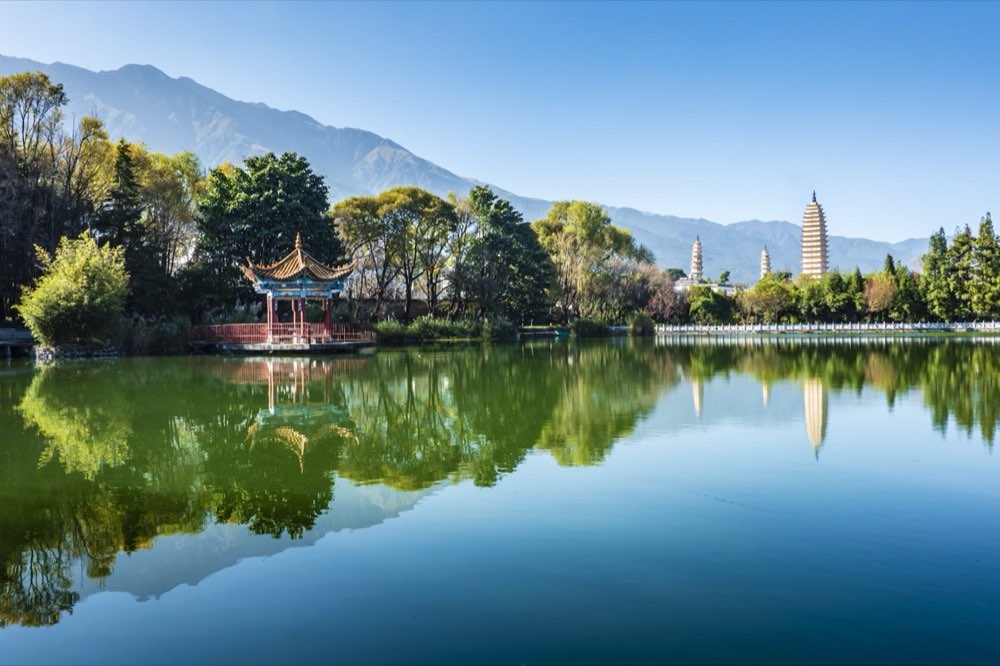
The tall central pagoda, Qianxun, is 69.13 metres and was built between 833 and 840. The two flanking pagodas are 42.19 metres each and were added between 1108 and 1172. The complex sits between the old town and the lake, with Cangshan directly behind it; the whole site has held national 5A status since 2011.
Why it matters: the purest image of Dali's age, and the one photograph everyone wants.
The range behind the town runs to nineteen named peaks with a walking trail along the middle slopes. Cable cars take you up; waymarked paths let you walk between valleys through cloud forest, with the lake laid out below like a map.
Why it matters: the best half-day in Dali if the weather is clear, and almost empty once you are 30 minutes from the cable car.
Gridded stone lanes inside Ming-era walls, with four gates, a central five-tower gatehouse, and water channels running down from the mountain.
Why it matters: convenient base, excellent food, and honest warning below — it is very commercial after dark.
Bai architecture is the thing you notice first: white walls, grey tiled roofs, and ink-painted scrolls above the doors. Courtyards are built to catch light in a narrow rectangle and to keep the household cool. Look for the painted lintels in Xizhou — some are over a hundred years old.
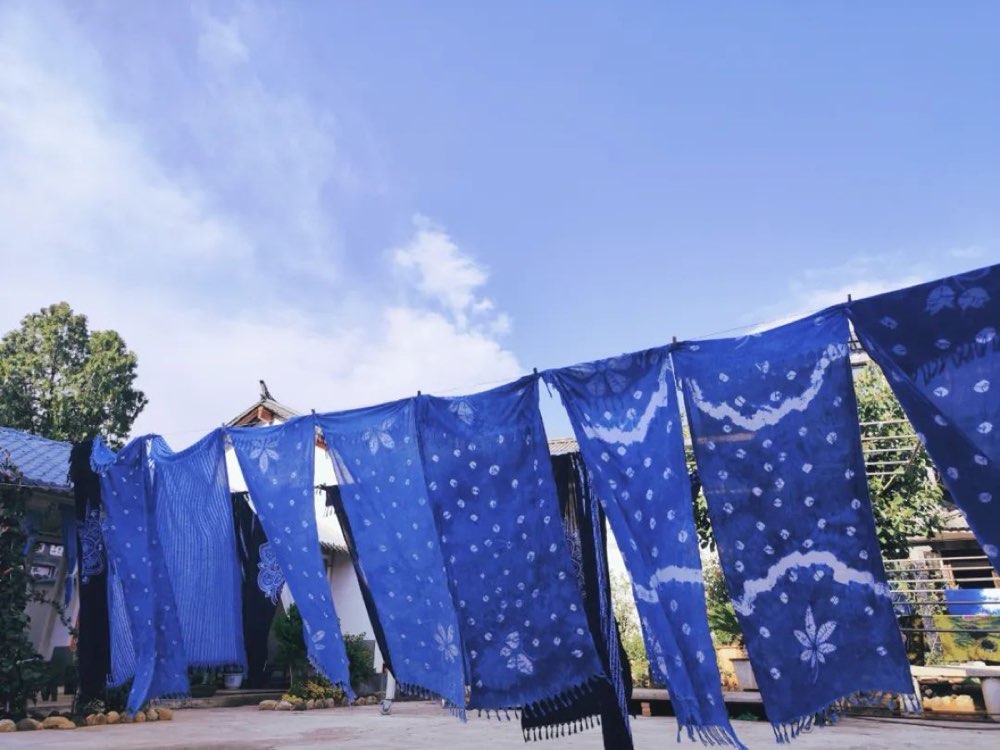
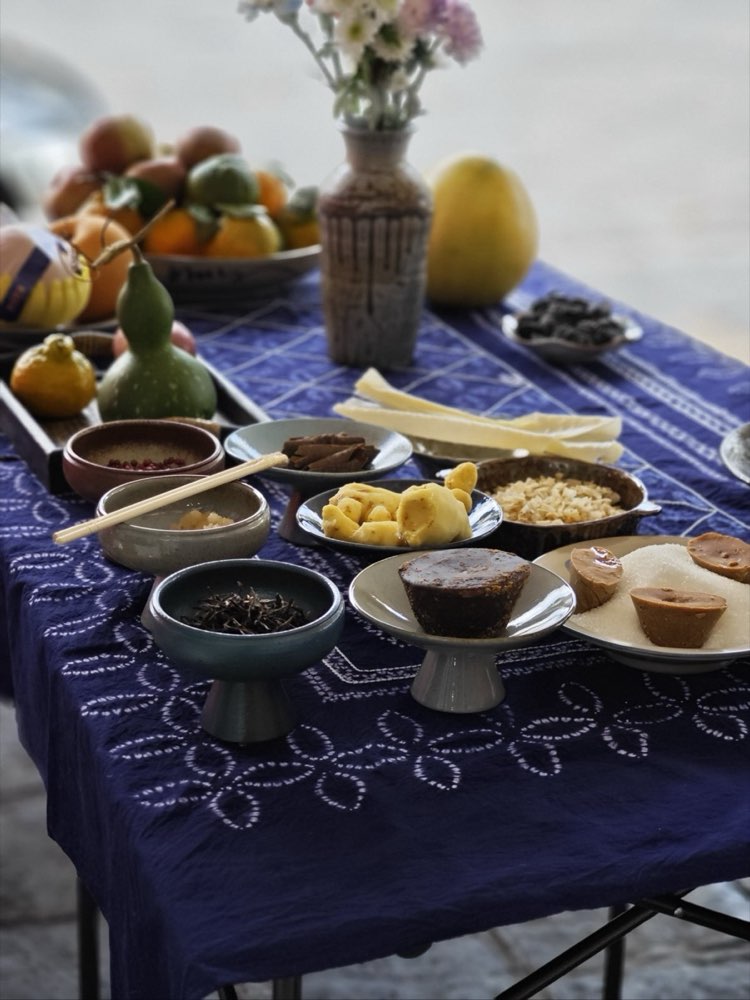
Three-course tea is the local ritual: bitter, then sweet, then a lingering aftertaste. It is offered at weddings, at festivals, and increasingly at teahouses for visitors. Tie-dye is the other craft: cloth bound and dipped in indigo fermented from the roots of local plants, hung to dry in long blue sheets. Zhoucheng village, north of the old town, is where most of it happens, and the craft was added to the national intangible heritage list in 2006.
The Bai are one of Yunnan's largest ethnic groups, with their own language, a long tradition of trade and farming around the lake, and a calendar of local festivals. The biggest is the Third Month Fair, held around the fifteenth day of the third lunar month: a market, a horse fair and a gathering of villages at the foot of Cangshan.
As a visitor, the respectful move is to buy from the person who made the thing rather than the shop that resells it, and to ask before photographing anyone's face up close, especially at a funeral or a temple rite.
A sheet of milk curd stretched over a bamboo frame and dried; grilled over charcoal with rose jam, or fried and eaten hot.
A layered wheat flatbread, either sweet with rose and sugar or savoury with minced meat and spring onion, baked in a round clay oven.
Lake fish simmered with pickled vegetables, chilli and local herbs; the sourness comes from fermentation, not vinegar.
Petals from the lake's flower fields preserved with sugar; spread on bread, stirred into tea, or sold by the jar.
Bitter, sweet, then a lingering finish — served as a set of three small cups.
We are based in Yunnan and can arrange a car with a driver, or help you find a guesthouse that suits how you travel. See Local Services — inquiry only, no booking fee from you.