Best season
May to October for green pastures; October and November for clear views of the snow peaks. Winter is cold, bright and very quiet.

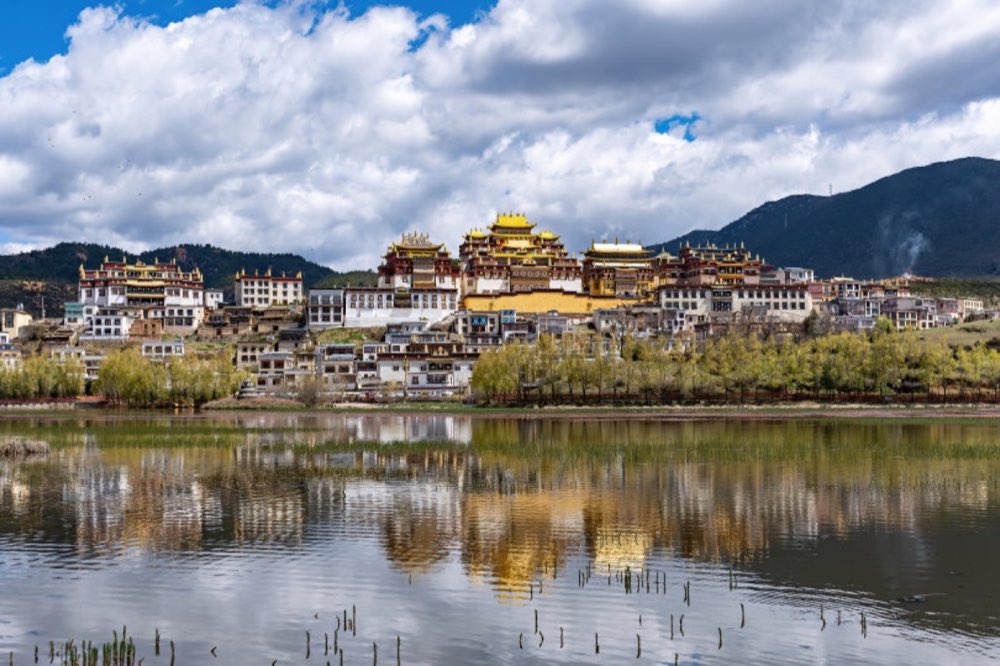
Tibetan Yunnan: monasteries, high pastures, butter lamps, and air thin enough to notice on the stairs.
Shangri-La sits on a high plateau at around 3,300 metres. The town was called Zhongdian until 2001, when it was renamed after the fictional Himalayan paradise in James Hilton's novel — a marketing decision that has, unusually, turned out to describe the place fairly well.
This is Tibetan country within Yunnan: monasteries rather than temples, yak rather than water buffalo, barley rather than rice, and a landscape of grassland, dark conifers and snow peaks that keeps opening out into bigger and bigger views.
Founded in 1679, the largest Tibetan Buddhist monastery in Yunnan and the seat of the Gelug school in the region. A hillside complex of white walls, gold roofs and long staircases, with monks in residence and morning prayer that visitors can attend quietly.
Why it matters: the single most important building in Tibetan Yunnan, and still a working monastery rather than a museum.
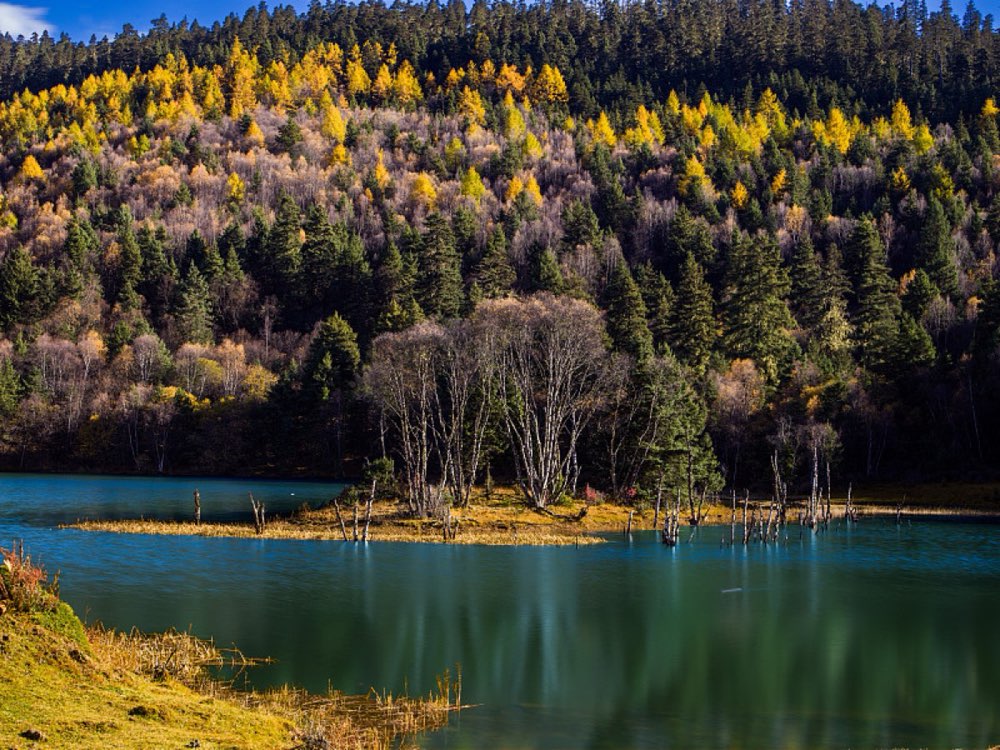
Two alpine lakes, Shudu and Bita, at roughly 3,500 to 3,700 metres, linked by boardwalks through spruce forest and summer pasture. In autumn the larch turns gold; in spring the meadows fill with primulas and gentians.
Why it matters: the easiest way to walk in high-altitude wetland without a trek, and superb for birdwatchers.
The old town of Zhongdian, rebuilt after a serious fire in 2014, with a stepped street climbing to Guishan Hill and the largest prayer wheel in the region — turned by hand, and slow going.
Why it matters: an evening walk and the best place to see local families turning the wheel at dusk.
Further northwest at Deqin, the Kawagebo peak rises to about 6,740 metres and has never been summited. After seventeen climbers died in an avalanche in 1991, local legislation in 2001 banned climbing the peak permanently — the only mountain in China protected this way.
Why it matters: the sunrise on the north face, seen from Feilai Temple, is one of the great spectacles of Asia, and it is a four-hour drive from town.

Monastery life sets the rhythm: dawn prayer, butter lamps, long courtyards swept in the cold, and debates in the afternoon. Visitors are generally welcome in the main assembly hall if they remove hats, keep voices low and do not photograph monks' faces without asking.
Thangka painting is the local craft — mineral pigment on cotton, worked from the outside in, with gold used last. Several workshops in the old town will show you the process; the good ones will not rush you.
The Tibetan communities of Diqing live between 2,000 and 4,000 metres, farming barley and raising yak and sheep on the summer pastures. The annual horse festival in June and the Tibetan New Year are the big gatherings, both with dancing that goes on longer than you expect.
Practical respect: walk clockwise around monasteries and stupas, do not touch the offerings, and do not step over prayer flags or sit on them for a photograph.
Brick tea churned with yak butter and salt; salty, oily, and exactly right at 3,300 metres.
Roasted barley flour mixed with butter tea and pressed by hand into a ball; the staple of every Tibetan household.
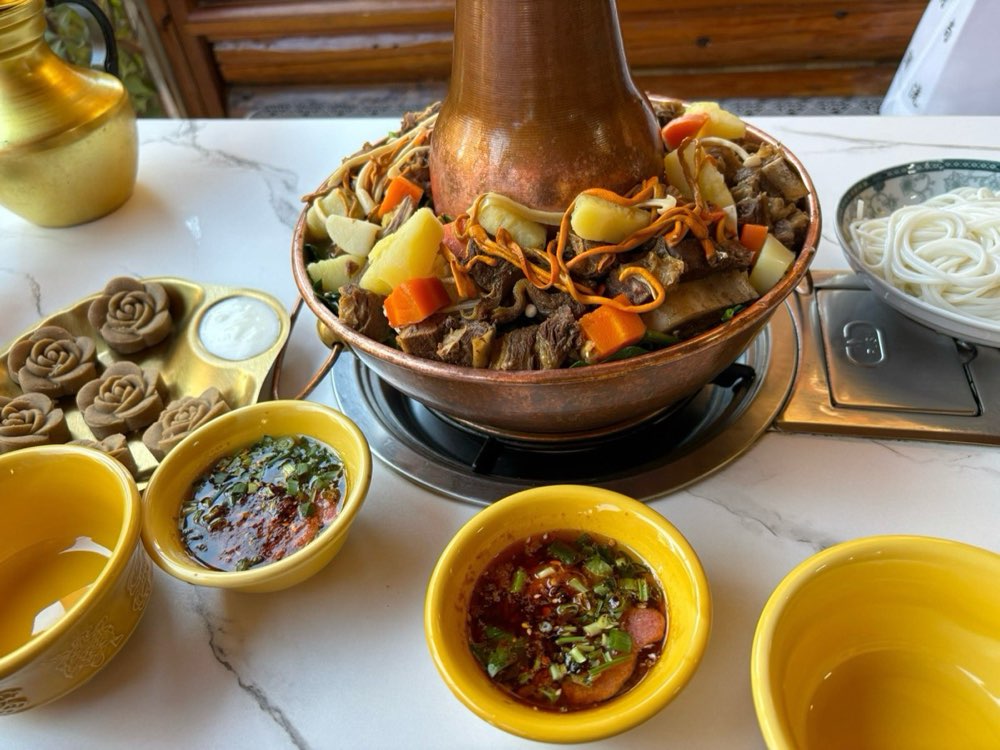
Lean, dark meat simmered with mushrooms and Tibetan herbs; the local winter dinner.
Lightly fermented barley wine, served warm in small cups at festivals and at family tables.
We are based in Yunnan and can arrange a car with a driver, or help you find a guesthouse that suits how you travel. See Local Services — inquiry only, no booking fee from you.