Best season
November to March, dry and warm, roughly 20 to 25 degrees in the daytime. April's water festival is spectacular and very wet.

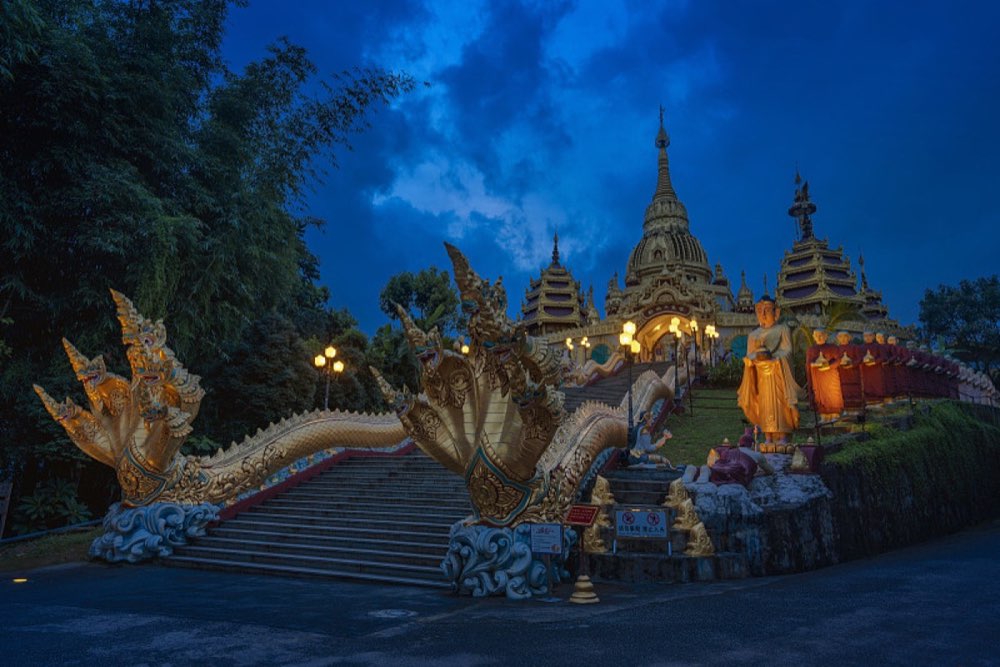
Tropical border country: golden pagodas, stilt-house villages, and Myanmar visible across the river.
Dehong sits in the far west of Yunnan, with roughly five hundred kilometres of border against Myanmar and a capital, Mangshi, at a comfortable nine hundred metres. The climate is warm and humid rather than alpine, which makes it the natural winter counterweight to the cold plateau further north.
The population is a mix of Dai, Jingpo, De'ang and Achang communities, with Theravada Buddhist temples in the Dai villages and a border economy that has always moved people, goods and languages back and forth.
The prefecture capital: wide streets, palm trees, and a night market that runs late with grilled fish, Burmese snacks and fruit you do not see further north.
Why it matters: the easiest introduction to Dehong's food, and a good base for the first night.
The main border town, with the 'one village, two countries' site at Yintian, where a single lane divides China from Myanmar, and boundary marker 71, erected in 1960.
Why it matters: the clearest sense of how porous this border has always been — and a lesson in how borders work in practice.
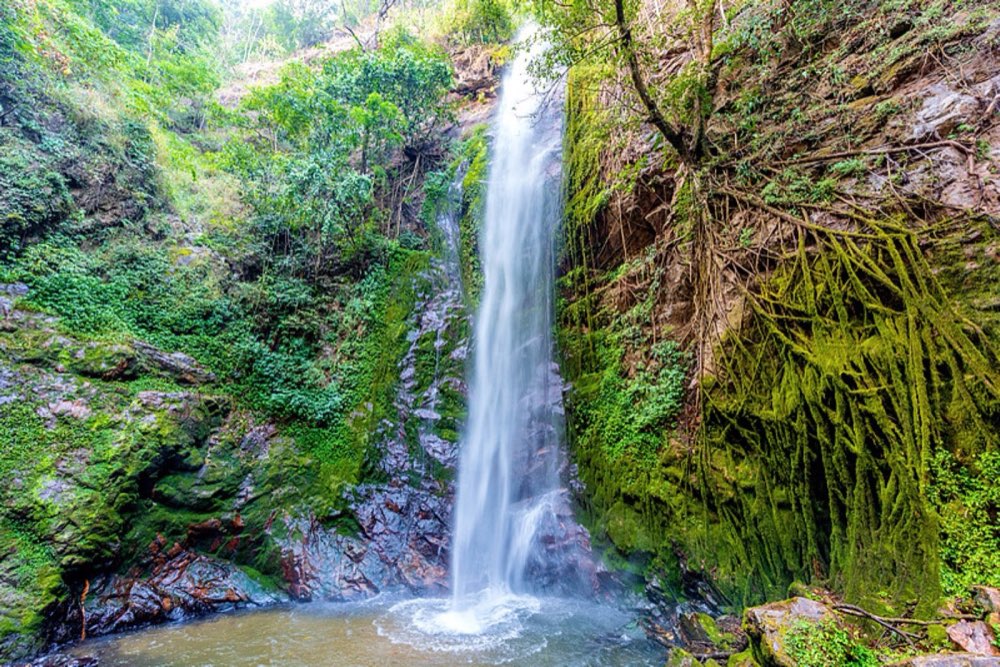
A short valley of rainforest with a waterfall at the end, ferns, lianas and a boardwalk that keeps your shoes out of the mud.
Why it matters: an easy half-day of real rainforest without needing a trek or a guide.
Stilt houses, bamboo groves, temple compounds with gilded roofs, and the sound of monks chanting in the early morning.
Why it matters: village life here is not staged; the temple is the centre of it.
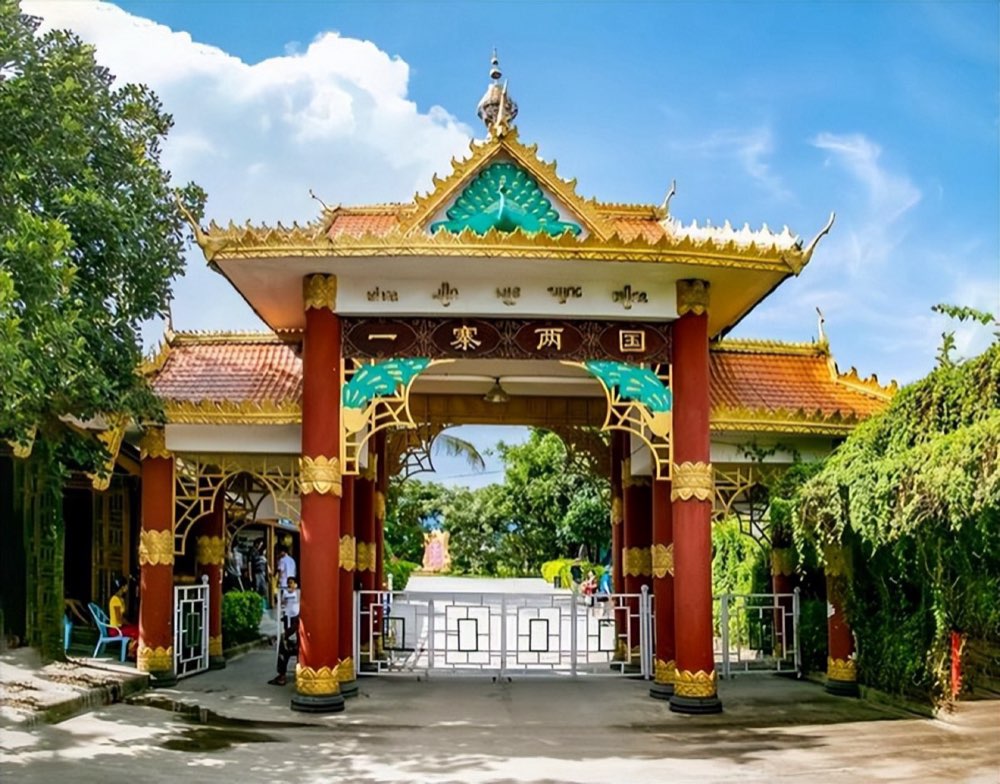
Theravada Buddhism shapes the Dai year: temple fairs, ordination ceremonies for young novices, and the water festival in mid-April. Unlike the Tibetan monasteries further north, these are village temples, busy with families rather than tourists.
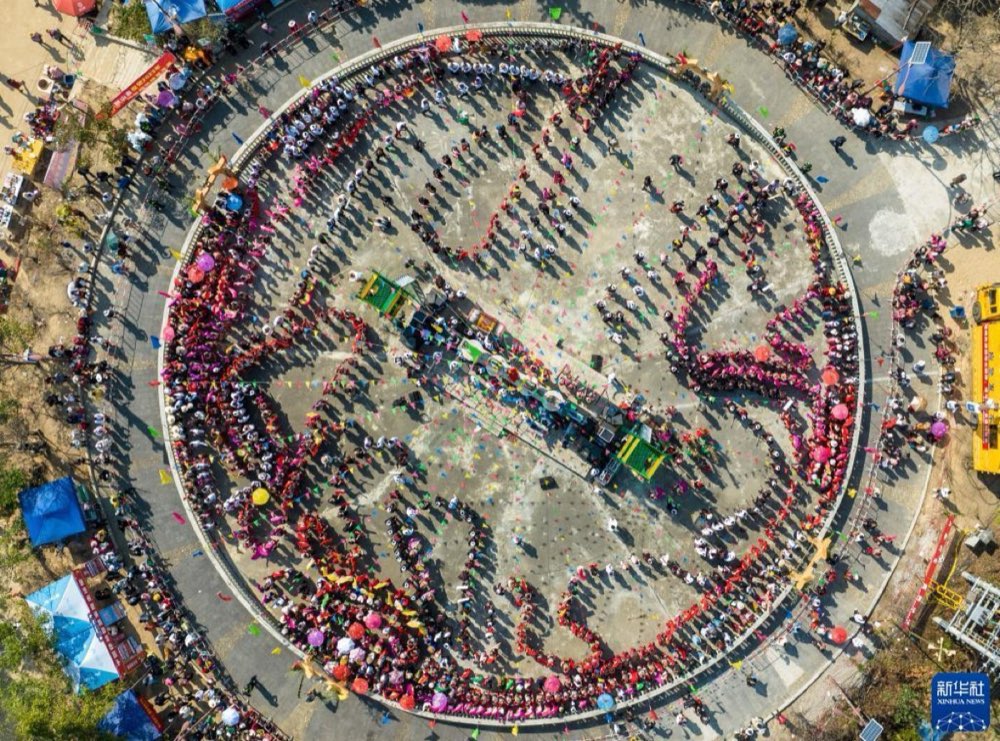
The Jingpo hold the Munao Zongge festival around the fifteenth day of the first lunar month, when thousands of people dance in a spiral around tall poles hung with painted boards — a mass dance with drums, and one that visitors are generally welcome to watch from the edge.
Dai communities live in the valleys and grow rice; Jingpo communities live on the ridges above them and, historically, practised shifting cultivation. That geography still shapes who lives where and what they eat.
Respect notes: remove shoes before entering a temple, do not point your feet at a Buddha image, and do not photograph novices without asking the abbot.
A bitter-herb broth with raw or lightly cooked beef, dipped piece by piece; an acquired taste and the most local thing on any menu.
A sweet iced drink of coconut milk, sago, red beans and crisp bread — Burmese in origin, everywhere in Dehong.
Cold shredded chicken with lime, chilli and wild herbs; sharp, sour, and very good in hot weather.
Glutinous rice steamed inside a pineapple shell, sweet and faintly sour.
We are based in Yunnan and can arrange a car with a driver, or help you find a guesthouse that suits how you travel. See Local Services — inquiry only, no booking fee from you.