Best season
November to April, the dry season: sunny, warm and low humidity. April is the water festival; June to October is the green season with heavy afternoon rain.

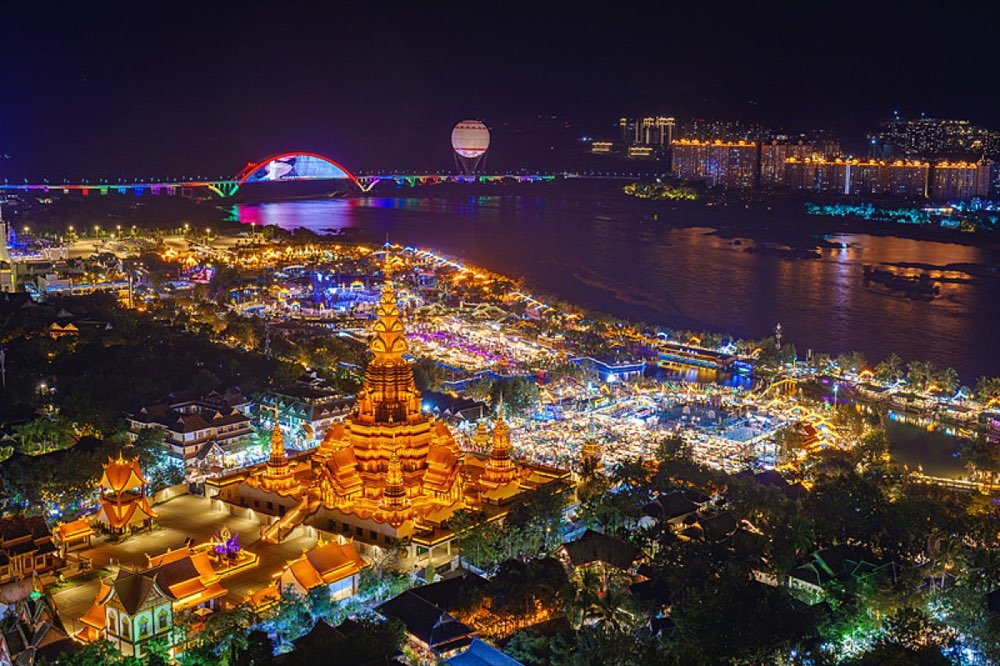
Rainforest, rubber, rice and gold roofs: the tropical south, where the Mekong is called the Lancang and the nights are loud with insects.
Xishuangbanna is the southernmost part of Yunnan, sitting on the Mekong as it leaves China for Laos and Thailand. The prefecture capital, Jinghong, is at about 550 metres, and the annual average temperature is around 21 to 22 degrees — no winter to speak of, and a green season that arrives as a daily downpour rather than a cold front.
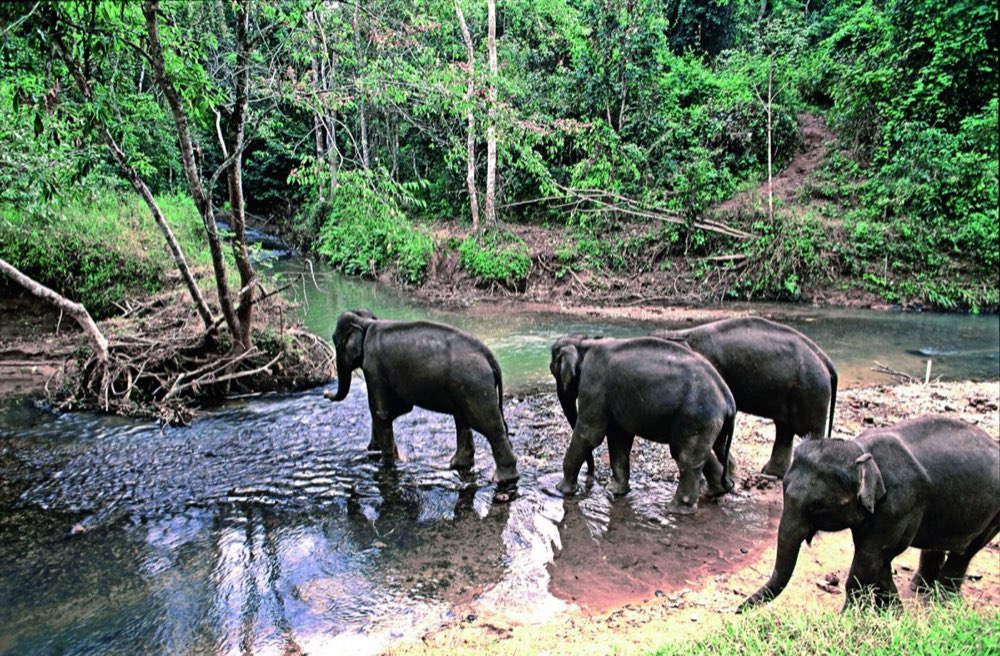
This is Dai country: stilt houses, Theravada Buddhist temples, rice, and a food culture that has far more in common with northern Thailand and Laos than with the rest of China. It is also the only place in China with a surviving population of wild Asian elephants.
The riverside night market under a gilded pagoda, with grilled fish, mango sticky rice, tropical fruit and riverside bars. It is touristy and it is still the best evening in the south.
Why it matters: one place to eat ten things you have never seen before.
Founded in 1959 by the botanist Cai Xitao at Menglun, covering around 1,100 hectares and holding more than 13,000 plant species — rainforest, palm collections, a lotus pond with leaves strong enough to stand on.
Why it matters: the single best introduction to tropical botany in China, and shaded enough to walk in the heat.
A rainforest reserve with a canopy walkway and salt licks where elephants sometimes come to feed. Sightings are not guaranteed and never have been.
Why it matters: this is the only realistic chance to see wild Asian elephants in China — with the caveat that wildlife does not perform on schedule.
Manting Park in Jinghong for the temple and the stilt houses, or Dai Garden outside town for a working village with weaving and bamboo houses.
Why it matters: seeing how a Dai household actually lives beats any performance venue.


The temple is the centre of a Dai village: boys traditionally spent time as novices, learning to read and write the Dai script there, and the temple school still functions in many places. Morning alms rounds and evening chanting structure the day.
Dai brocade is the craft to look for — cotton woven with supplementary weft patterns, often in indigo and red. Buy from a weaver, not a market stall, and you will pay less for better work.
The Dai are the largest group in the prefecture, with their own language, calendar and Buddhist tradition. The Water Splashing Festival in mid-April marks the Dai New Year: water is poured and thrown as a blessing, not a water fight. Join if invited, keep phones in a dry bag, and never splash monks.
Other groups in the prefecture include the Hani, Bulang and Jinuo, mostly in the hills above the valley, with their own tea and farming traditions.
Glutinous rice with coconut and sugar, steamed in the pineapple itself.
Whole fish stuffed with lemongrass, garlic and herbs, grilled over charcoal and eaten with the fingers.
Small skewers of pork, chicken skin and vegetables, wrapped in banana leaf and dipped in sour chilli sauce.
Banana blossom shredded and dressed with lime, chilli and mint — bitter, fresh, and unexpected.
Fermented bamboo shoots, intensely aromatic; the base of many soups and the reason some travellers fall in love or give up.
We are based in Yunnan and can arrange a car with a driver, or help you find a guesthouse that suits how you travel. See Local Services — inquiry only, no booking fee from you.